The Relationship Between Generative UI and Self-Determination Theory (SDT)
The Relationship Between Generative UI and Self-Determination Theory (SDT)
Sep 2025
Introduction
Generative UI (GenUI) is reshaping the way interfaces are designed, moving from static screens to dynamic, AI-driven experiences. At the same time, Self-Determination Theory (SDT) offers a psychological lens to evaluate how these interfaces affect user motivation, satisfaction, and engagement. Bringing these two perspectives together highlights both opportunities and risks for the future of UX design.
Generative UI in Brief (NN/g Summary)
Definition: Interfaces generated in real time by AI, personalized to user context and intent.
Shift in Design: From designing fixed elements to designing outcomes. Designers act as orchestrators, guiding rules and constraints rather than drawing every screen.
Benefits: Greater personalization, efficiency, and alignment with user needs.
Challenges: Predictability, data dependence, privacy, and risks of AI errors.
Source:
Self-Determination Theory in UX (Karim Saif’s Perspective)
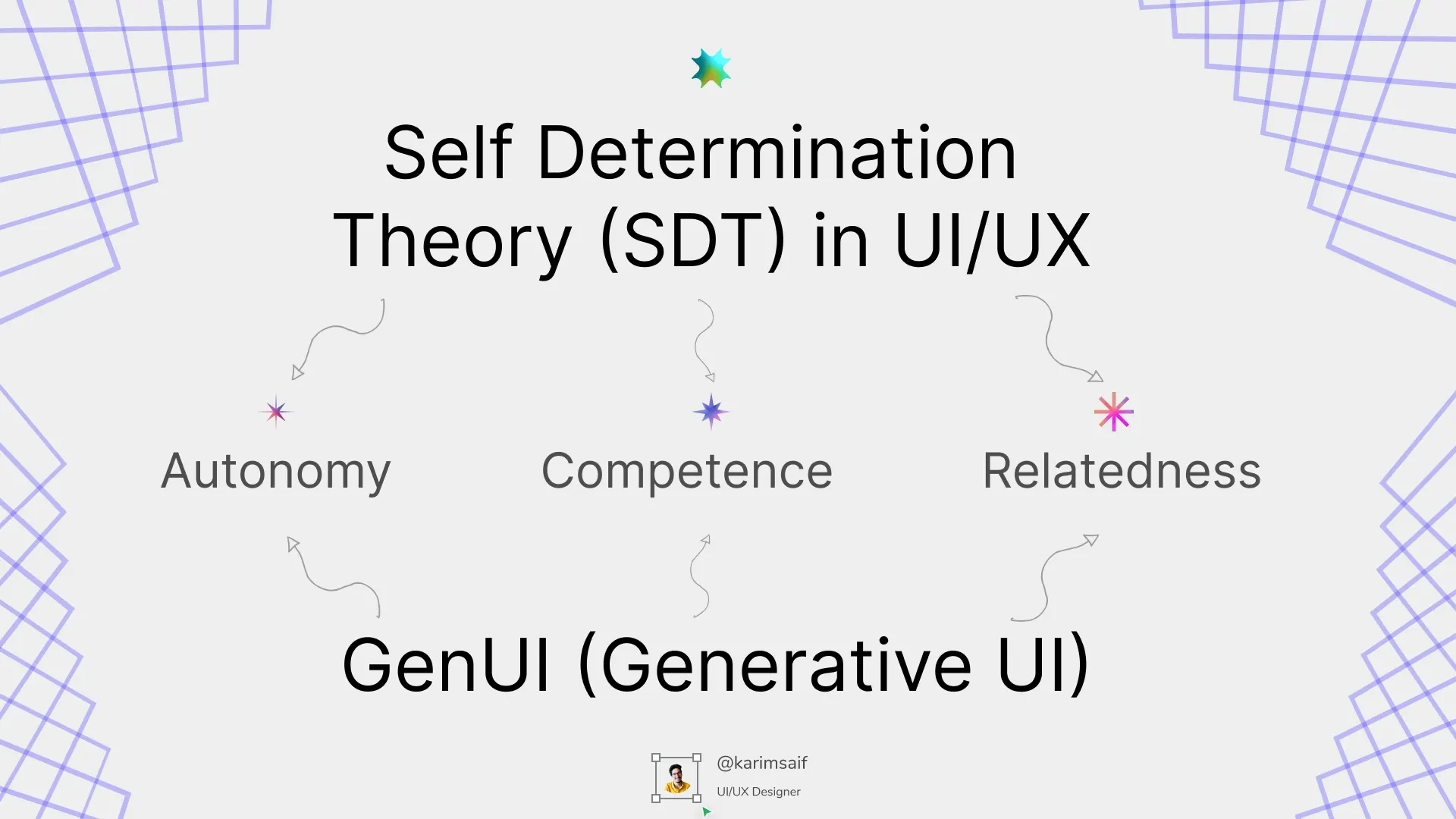
SDT emphasizes three key psychological needs:
Autonomy: Users need to feel in control of their choices.
Competence: Users need to feel capable and effective.
Relatedness: Users need to feel connected and recognized.
In UX design, addressing these needs leads to more engaging, motivating, and satisfying user experiences.
The Intersection: How GenUI Relates to SDT
Autonomy:
Support: GenUI adapts to preferences, allowing users to achieve outcomes faster with less friction.
Risk: Over-automation may limit choice and transparency, leaving users feeling disempowered.
2. Competence
Support: Context-aware interfaces reduce errors and help users succeed quickly, boosting confidence.
Risk: If interfaces change too often or unpredictably, users may feel lost, reducing their sense of mastery.
3. Relatedness
Support: Personalized experiences that “understand” users create a sense of recognition.
Opportunity: Future GenUI systems could integrate social or collaborative features to deepen relatedness.
Evidence & Examples
Airline Booking (NN/g Example): A system that adapts to seat preference, time, and event context increases competence (successfully booking the right flight) and autonomy (choosing from relevant options).
UI Transparency (SDT Insight): Karim Saif highlights that autonomy requires visible choices. In GenUI, explaining why an interface adapts (e.g., “Showing flights based on your past preferences”) preserves autonomy.
Consistency Anchors: Maintaining stable interaction patterns ensures competence, preventing the loss of confidence caused by unfamiliar, shifting designs.
Design Recommendations
Provide override options to maintain autonomy.
Use personalization that feels supportive, not manipulative.
Maintain consistency anchors while allowing adaptive flexibility.
Clearly communicate the logic behind AI-driven adaptations.
Explore relational cues — interfaces that “see and understand” the user — to enhance relatedness.
Conclusion
Generative UI and Self-Determination Theory are deeply connected. While genUI focuses on achieving user outcomes through AI-driven adaptability, SDT ensures those outcomes align with human motivation and psychological well-being. By blending both perspectives, designers can create interfaces that are not only intelligent but also empowering, confidence-building, and meaningful.
References
Introduction
Generative UI (GenUI) is reshaping the way interfaces are designed, moving from static screens to dynamic, AI-driven experiences. At the same time, Self-Determination Theory (SDT) offers a psychological lens to evaluate how these interfaces affect user motivation, satisfaction, and engagement. Bringing these two perspectives together highlights both opportunities and risks for the future of UX design.
Generative UI in Brief (NN/g Summary)
Definition: Interfaces generated in real time by AI, personalized to user context and intent.
Shift in Design: From designing fixed elements to designing outcomes. Designers act as orchestrators, guiding rules and constraints rather than drawing every screen.
Benefits: Greater personalization, efficiency, and alignment with user needs.
Challenges: Predictability, data dependence, privacy, and risks of AI errors.
Source:
Self-Determination Theory in UX (Karim Saif’s Perspective)
SDT emphasizes three key psychological needs:
Autonomy: Users need to feel in control of their choices.
Competence: Users need to feel capable and effective.
Relatedness: Users need to feel connected and recognized.
In UX design, addressing these needs leads to more engaging, motivating, and satisfying user experiences.
The Intersection: How GenUI Relates to SDT
Autonomy:
Support: GenUI adapts to preferences, allowing users to achieve outcomes faster with less friction.
Risk: Over-automation may limit choice and transparency, leaving users feeling disempowered.
2. Competence
Support: Context-aware interfaces reduce errors and help users succeed quickly, boosting confidence.
Risk: If interfaces change too often or unpredictably, users may feel lost, reducing their sense of mastery.
3. Relatedness
Support: Personalized experiences that “understand” users create a sense of recognition.
Opportunity: Future GenUI systems could integrate social or collaborative features to deepen relatedness.
Evidence & Examples
Airline Booking (NN/g Example): A system that adapts to seat preference, time, and event context increases competence (successfully booking the right flight) and autonomy (choosing from relevant options).
UI Transparency (SDT Insight): Karim Saif highlights that autonomy requires visible choices. In GenUI, explaining why an interface adapts (e.g., “Showing flights based on your past preferences”) preserves autonomy.
Consistency Anchors: Maintaining stable interaction patterns ensures competence, preventing the loss of confidence caused by unfamiliar, shifting designs.
Design Recommendations
Provide override options to maintain autonomy.
Use personalization that feels supportive, not manipulative.
Maintain consistency anchors while allowing adaptive flexibility.
Clearly communicate the logic behind AI-driven adaptations.
Explore relational cues — interfaces that “see and understand” the user — to enhance relatedness.
Conclusion
Generative UI and Self-Determination Theory are deeply connected. While genUI focuses on achieving user outcomes through AI-driven adaptability, SDT ensures those outcomes align with human motivation and psychological well-being. By blending both perspectives, designers can create interfaces that are not only intelligent but also empowering, confidence-building, and meaningful.
References
Related posts
Aug 2025
The Power of Self-Determination Theory (SDT) in UI/UX Design
In the ever-evolving landscape of technology, AI and machine learning have emerged as pivotal elements in shaping the future of UI/UX design.

Aug 2025
The Power of Self-Determination Theory (SDT) in UI/UX Design
In the ever-evolving landscape of technology, AI and machine learning have emerged as pivotal elements in shaping the future of UI/UX design.
Sep 2025
Designing for Accessibility: A UI/UX Designer's Guide
Accessibility in design is not just a trend or a regulatory checkbox; it's a fundamental aspect of creating inclusive digital experiences.
Sep 2025
Designing for Accessibility: A UI/UX Designer's Guide
Accessibility in design is not just a trend or a regulatory checkbox; it's a fundamental aspect of creating inclusive digital experiences.